Mankai Duckweed Protein: What It Is and Its Status
Mankai duckweed protein comes from one patented Wolffia globosa strain. What its 40 to 48 percent figure describes, and its EU and US status.
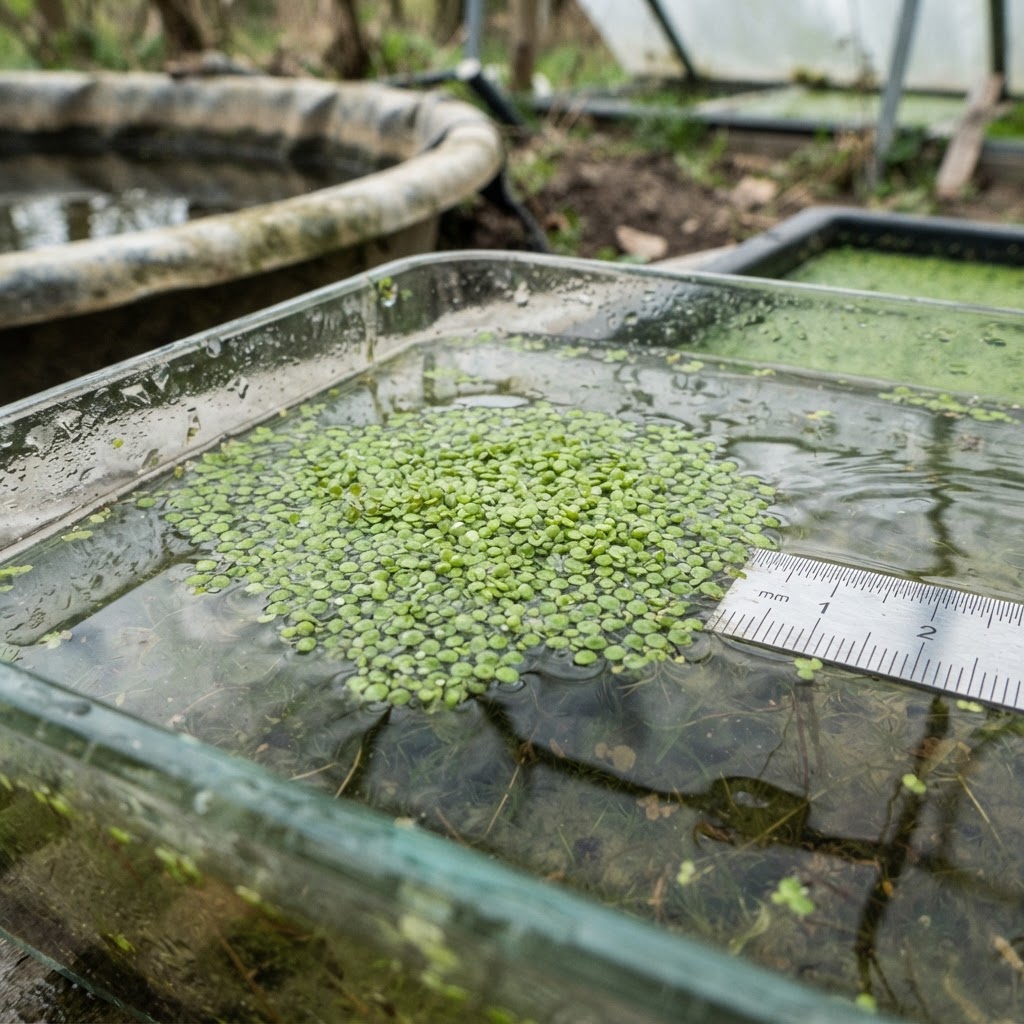
Mankai duckweed protein is usually quoted as a single figure, somewhere above 40 percent of dry weight. The figure is real. What it describes is narrower than the pages repeating it suggest.
Mankai is not a species and not a category. It is one cultivated strain, grown one way, dried into one product, and put through regulatory procedures that did not all end the same way. Read the primary documents side by side and three separate questions come apart: what the plant is, what the number measures, and where it may legally be sold.
This article takes them one at a time, citing each to the document it comes from.
Mankai is a strain, not a species
Mankai is the name Hinoman gave to a cultivated strain of Wolffia globosa. According to the EFSA opinion on Hinoman’s application, the plant was authenticated as Wolffia globosa in 2014 and the strain was patented by the applicant as Wolffia globosa Mankai. The same opinion places it in a family of 38 species across five genera: Spirodela, Landoltia, Lemna, Wolffiella and Wolffia.
The company describes the plant as about 0.5 mm across and grown indoors in a closely controlled hydroponic greenhouse.
That matters for every number that follows. A Mankai protein figure describes one strain under one cultivation regime. It is not a figure for duckweed protein in general, and it does not transfer to a pond of wild Lemna.
What the protein number actually describes
Composition versus specification
Three documents give three slightly different figures, and they are not contradicting each other. They are answering different questions.
The applicant’s dossier summary for Mankai D110, the dried powder, gives protein at 40 to 48 percent, carbohydrates at 24 to 40 percent (of which 75 percent is dietary fibre), fat at 6 to 12 percent and minerals under 10 percent. The company’s own product page rounds this to 45 percent plus.
EFSA reports the analysed composition as protein 43 to 46 percent, carbohydrates 35 to 40 percent, fat 9.5 to 12 percent and ash 2.8 to 8.3 percent. It then lists the proposed specification: protein (N x 6.25) 40 to 50 percent, fat 7 to 10 percent, total fibre 27 to 35 percent, moisture under 5 percent.
The difference is worth knowing. A composition is what was measured in the batches tested. A specification is the range the producer commits every future batch to fall inside. For a formulator the specification is the number that matters, because it is the one a supplier can be held to.
Note also the method: N x 6.25 is crude protein, total nitrogen multiplied by a conversion factor. It is the standard basis, and it counts some nitrogen that is not protein.
Quality: PDCAAS and digestibility are different measurements
The applicant describes the amino acid profile as similar to egg, with a protein digestibility-corrected amino acid score of 0.89. A GLP toxicology study on Dry Mankai restates the 89 percent figure and cites a human trial by Kaplan and colleagues that found essential amino acid bioavailability comparable to cheese and peas.
Those are the applicant’s measurements of its own product. Independent numbers for the genus look different depending on the method. An in vitro study of standardised ileal crude protein digestibility put Wolffia at 69 percent, Lemna at 72 percent and Spirodela at 39 percent. A randomised human postprandial trial on Lemna minor found low amino acid appearance in the blood compared with peas.
None of these results cancels another. They measure different things, in different species, after different processing. The practical point is that “complete protein” is a claim about amino acid presence, while digestibility and bioavailability depend on strain, method and what happened to the plant before it was eaten. The duckweed amino acid profile across genera shows how wide that spread can be.
Where its EU status stands
This is where most pages go quiet, and where the documents are clearest.
The powder: a negative EFSA opinion
Hinoman submitted its application to authorise Wolffia globosa powder as a novel food on 24 September 2019, for use as a food ingredient and in food supplements. The EFSA panel published its opinion in December 2021.
The conclusion: the safety of the powder could not be established. The reason was manganese. At the proposed supplement dose of 20 g per day, the powder alone would add 2.33 mg of manganese per day, which the panel calculated could raise intake by 39 percent over the highest background mean for adults. The panel considered that increase a safety concern.
Two further findings sit in the same opinion. Based on its protein concentration, the powder may trigger allergic reactions. And the panel read the subchronic toxicity study as showing a number of significant findings, setting the no observed adverse effect level at the middle dose, 6.5 g per kg of body weight per day. The published toxicology paper, working from a study on the same D110 product, reported no treatment-related adverse effects up to 20 percent of the rat diet. Same kind of study, two readings. A regulator’s reading is the one that decides market access.
The fresh plant: a different route, a different applicant
Fresh Wolffia reached the EU list by another door. Implementing Regulation (EU) 2021/2191 of 10 December 2021 authorises fresh plants of Wolffia arrhiza and/or Wolffia globosa as a traditional food from a third country. The notification came from GreenOnyx, not Hinoman, on 7 September 2020, on the basis of a long history of safe use in Southeast Asia.
Even that authorisation is conditional on the water. EFSA’s technical report found no safety concern for plants grown in the vertical farming conditions described, and the regulation sets upper limits for heavy metals, microcystins, copper, molybdenum, zinc, boron and manganese.
So in the EU, a fresh Wolffia globosa plant and a dried Mankai powder are different legal objects. One has an authorisation. The other met a negative opinion in 2021.
We could not confirm from a primary source whether the powder’s status has changed since. A 2026 review in Foods cites a 2022 implementing regulation for W. globosa, but that number does not match the fresh plant regulation on EUR-Lex. Anyone planning to put dried Mankai on an EU label should check the current Union list of novel foods directly, not a secondary source. This article included.
Why a Lemna concentrate is a third story
A third route exists for the family. Implementing Regulation (EU) 2024/1048 authorises a protein concentrate from Lemna gibba and Lemna minor, with market placement restricted to ABC Kroos BV until 30 April 2029. Different genus, different form, different holder. The wider duckweed alternative protein picture is a patchwork of exactly these narrow permissions.
Where its US status stands
In the United States, Hinoman’s GRAS dossier for Mankai is public on the FDA site, and the Foods review describes Mankai as notified as generally recognised as safe for selected food categories.
GRAS attaches to a notifier, a product and its intended uses. It does not attach to Wolffia, and still less to duckweed as a family. Another producer growing another strain in another system starts from its own evidence.
What the filings do not license
Authorisation is permission to sell an ingredient under defined conditions. It is not evidence of a benefit.
The 2026 Foods review of Wolffia globosa is direct about this: human clinical evidence remains limited, and regulatory assessments support use as a food ingredient but do not substantiate health claims. Research on Mankai’s vitamin B12 has identified bioactive cobalamin forms in the plant. That is a measurement of composition. It is not an authorised claim, and we do not make one.
Controlled water is the whole product
Every document above returns to the same variable. EFSA notes that trace elements and contaminants in the powder depend on the conditions of cultivation and the fertiliser composition. The fresh plant regulation writes contaminant limits into the specification.
The reason is biological. A systematic review in Agronomy found that duckweed accumulates minerals several hundred fold relative to the water it grows on, and concluded that duckweed for food cannot be associated with clean-up systems. The same review notes that calcium oxalate crystals are absent in Wolffia and present in Spirodela and Lemna, one more reason genus matters.
This is the line SERAPH draws in its own published policy. Duckweed is excellent at pulling nitrogen, phosphorus and metals out of water, which is what makes duckweed wastewater treatment work. Biomass grown that way is never sold or blended as food or feed, and the two streams are separated from the first sensor reading. Mankai’s protein figure exists because its water is controlled. Remove the control and the figure means nothing.
What we take from it at SERAPH
We are early, and we say so. SERAPH is at TRL 3, proof of concept, with outdoor field validation still ahead. We sell a cultivation system and know-how, not protein, and we publish no yield figures.
Our knowledge base indexes 256 duckweed papers across 31 research areas in five domains. Reading Mankai’s file against that literature, the lesson is not about one company. It is that a protein number, the physical form it describes and the filing that permits its sale travel together. Quote one without the other two and the number stops meaning anything. That holds for Wolffia protein as a whole, and for every figure in duckweed nutritional value tables.
Built for the field, not the lab. AI proposes, the bench validates.
FAQ
Is Mankai the same as duckweed?
It is one patented strain of Wolffia globosa. Wolffia is one of five genera in the duckweed family, which EFSA counts at 38 species. Figures for Mankai describe that strain, not the family.
Can Mankai powder be sold as food in the EU?
EFSA concluded in December 2021 that the safety of Hinoman’s Wolffia globosa powder could not be established, because of the extra manganese intake at the proposed doses. We could not confirm a later decision from a primary source, so check the current EU Union list of novel foods before relying on any answer.
Are fresh Wolffia plants allowed in the EU?
Yes, but only the fresh plant, and only as a traditional food from a third country. Implementing Regulation (EU) 2021/2191 covers fresh Wolffia arrhiza and/or Wolffia globosa as such, with upper limits on heavy metals, microcystins and several trace elements.
Does Mankai contain complete protein?
The applicant reports all nine essential amino acids and a PDCAAS of 0.89. That is the applicant’s measurement of its own product, not a regulatory finding, and it says nothing about any health effect.